Closing the Loop
Closing the Loop:
What Circular Design Really Means for Interiors
Designers and specifiers are facing an inflection point. For decades, sustainability has driven material innovation, yet too often it has been cloaked in broad language and technical jargon. But circular design isn’t another passing buzzword – it is the framework reshaping how interiors are built, maintained, and eventually renewed.
We thought we’d take the time to demystify circular design in the interior environment, exploring why it matters, how it is being implemented, and what role new materials play in closing the loop.
From Linear to Circular
At its core, circular design stems from economic models of resource use.
In the linear model of consumption resources are extracted, manufactured into products, used, and ultimately discarded. Whereas in the circular model resources are designed to remain in use through cycles of reuse, recycling, and renewal.
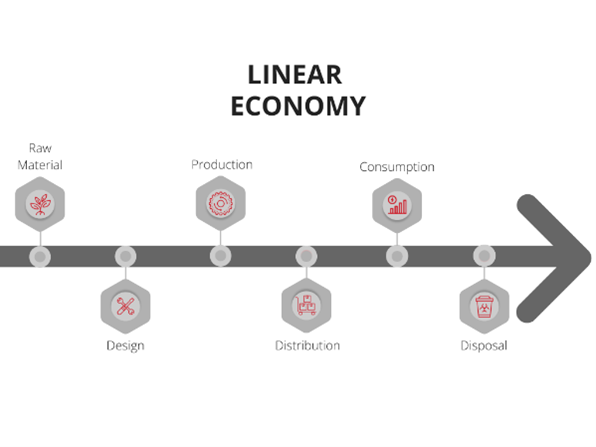
Result: 30–40% of global solid waste comes from construction and demolition(C&D) waste, much of it generated by interiors.
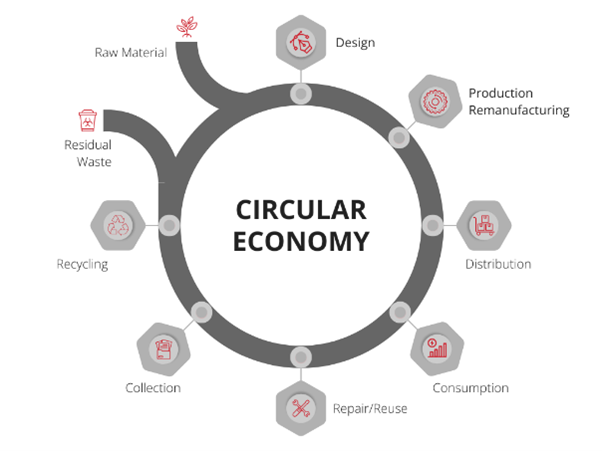
Result: The EU estimates circular design could reduce construction sector waste by up to 60% and cut embodied carbon by 38%.
Applying this to interiors means reconsidering not only what we build with, but also how often those materials are replaced and how they re-enter the cycle at end-of-life.
Why Interiors Are the Frontline of Circularity
While a building’s structure may last half a century, its interiors tell a different story:
- Commercial spaces: refitted every 2–3 years on average.
- Healthcare facilities: some areas replaced every 12–18 months due to high wear.
In Australia alone, C&D waste exceeded 27 million tonnes in 2020–21, with interior fit-outs a major contributor.
This constant churn generates some of the highest volumes of waste in the built environment. But it also makes interiors the richest opportunity for change. By choosing circular materials, every refit can reduce landfill burden and embodied carbon.
What Circular Materials Look Like
Circularity in interiors is not abstract – it can be measured though the properties of materials:
Recycled Content
Incorporating post-consumer plastics diverts material from landfill.
Durability
Longer life cycles reduce replacement rates.
Ease of Maintenance
Materials designed for easy cleaning and repair extend usability.
End-of-Life Recyclability
Products designed for safe disassembly or reprocessing.
Together, these attributes reduce waste, lower lifecycle costs, and improve compliance with evolving standards.
Market Momentum: The Shift in Specifications
The push for circularity is no longer optional – with multiple drivers pushing the industry towards more sustainable materials – circular design is both an environmental imperative and a business necessity.
Regulatory drivers:
The AIA’s Industry Decarbonization Plan (2025–2050) calls for a 20% reduction in embodied carbon and 40% reduction in upfront carbon by 2030.
Commercial drivers:
Studies show that circular interiors can cut replacement costs by up to 25% over a 20-year lifecycle.
Competitive drivers:
Specifiers and asset owners now rank sustainability in the top three decision factors when choosing interior materials (Dodge Construction Network, 2023).
Circular materials example: Wall Protection
Consider wall protection – a ubiquitous feature in hospitals, schools, and high-traffic facilities. Traditionally, these products contributed heavily to waste at end-of-life.
Acrovyn Wall Protection takes a different approach. Acrovyn is designed for durability, it’s industry-leading composition outperforms typical wall protection by years – meaning less waste.
Easy cleaning and simple repairs also mean only the outer component needs to be replaced in the event of damage, not the entire product – maximising product life and reducing waste over time, aligning with circular design principles.
Building on this foundation is Acrovyn Recycled Content. Setting a new standard for reducing waste without compromise Acrovyn with Recycled Content is:
- Up to 50% post-consumer plastic content.
- Durable and easy to clean, designed for high-impact environments.
- Available across the full Acrovyn range – handrails, crash rails, corner guards – in a variety of patterns and colours.
Fostering circularity doesn’t have to involve a complete perspective shift in how you spec a project – scaling a single product innovation across thousands of square metres of wall can boost a design’s circularity significantly, without sacrificing performance.
The Bottom Line
Circular design is not a distant aspiration – it’s a practical framework already reshaping interiors. Every specification choice is an opportunity to close the loop, extend material lifespans, and reduce waste footprints.
The future of sustainable interiors will be won not by abstract ideals, but by smarter decisions at the material level.
For more clarity on how we can help bring more circularity to your next project, reach out to one of our experienced Sales Representatives.