Slimline modular ventilation louvres offering excellent airflow performance – ideal for applications with permanent mechanical extract ventilation, such as data centres.

ENTRY

DISCHARGE
Classifications based on testing to EN 13030.
Features & Advantages
- Slimline design allows for high airflow and low pressure drop
- Channels in blades and vertical sections help collect and drain away rainwater
- Visible interlocking mullions align with other façade elements; an invisible vertical joint detail can be achieved with hidden mullions for a continuous look
- Supplied to site as pre-fabricated modules for efficient installation
Specification Calculators
We've built 2 tools to help you with your specification process. One to help you calculate pressure drop for your chosen CS Louvre model, the other to help you calculate the area of louvre required for your project.
KEY FEATURES
- Blade orientation: Horizontal
- Joint options:
- Horizontal: visible
- Vertical: visible (interlocking mullion) or invisible (hidden mullion)
- Louvre depth: 53 mm (see product sheet for more detail)
- Blade pitch: 54 mm
- Weight: 12 kg/m2, based on a 2 m x 2 m module size
- Maximum module dimensions (based on 1.5 kPa wind load):
- Max width: 3600 mm*
- Max height: 3600 mm*
* Maximum unit weight: 150 kg, including accessories. Site access and lifting capability should be assessed prior to specification and installation.
Download Technical Datasheet for detailed drawings.
PERFORMANCE
EN 13030
- Airflow Class: 2 (entry), 1 (discharge)
- Airflow Coefficient Ce (entry): 0.383
- Airflow Coefficient Cd (discharge): 0.423
- Wind-Driven Rain Performance Class:
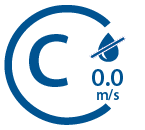
- 13 m/s, 75 mm/hr = C at 0.0 m/s
MATERIALS & FINISHES
MATERIALS
- Aluminium alloy 6063-T6
- Nominal thickness: 1.60 mm for blades, head, cill and jamb frames, and for mullions
- Aluminium components are manufactured with a minimum of 55% recycled content (mix of pre- and post-consumer scrap)
FINISH OPTIONS
- Mill finish
- Clear or colour anodised
- Polyester powder-coated – matt (standard) or gloss
OPTIONAL EXTRAS
- Bird/vermin guards – galvanised weld mesh (standard) or expanded aluminium
- Insect mesh
- Blanking – single skin plates or insulated panels
- Louvred doors
- Dampers
Specification
Guidance
The principal reason for using louvres is to allow the movement of air. But, louvre specification is a balance between form and function, with louvred façade appearance playing an important part in the selection process.